
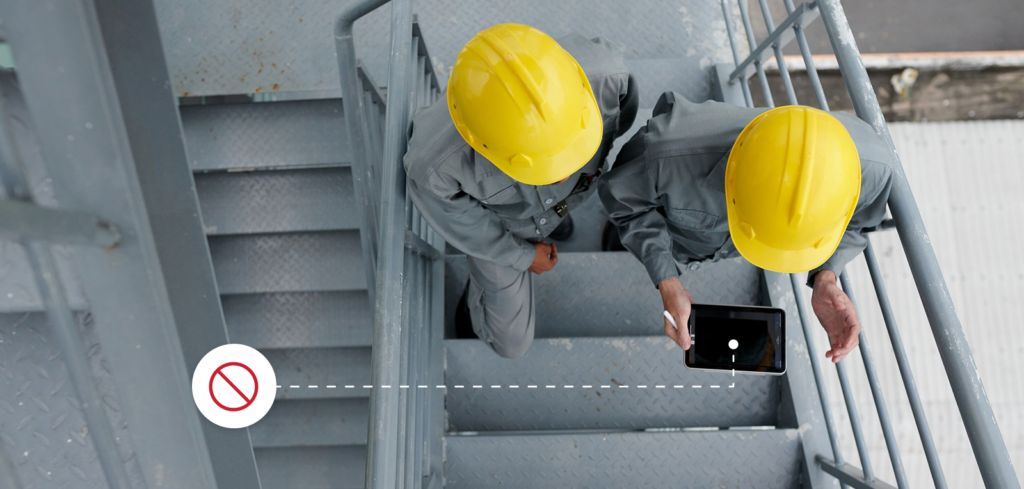
There’s a telling moment that happens in organisations across every industry. Head office launches a new system, celebrates another step in its digital transformation journey and then carries on as usual. On the frontline, however, very little changes because many employees can’t access the new tool while they’re doing their jobs.
Maybe the system only works on a desktop in a back office. Maybe employees have to wait until the end of a shift to use a shared kiosk. In some environments, such as factories and mines, mobile phones aren’t even allowed on the floor, on shift.
The result? The people closest to the work are often furthest from the information, systems and processes designed to support them.
If they can’t access it, they can’t use it
The best workplace technology is almost invisible, slotting into the rhythm of how work already happens.
Consider how your frontline actually communicates: they use mobile devices right before and after shifts, work in short bursts and respond to posts and messages, not email threads. They trust what they can understand, be it a clear announcement, a word from their manager, or a digital platform that’s easy to use. If your new system ignores all of that, it becomes added work and no amount of training will save it. You’ll spend months pushing adoption (in vain) instead of seeing it happen naturally.
The organisations that get this right understand their worker’s day-to-day reality. What does a shift really look like? When and where do things get communicated, missed or dropped? What would make that process 10% easier? Your shiny, new initiative may have sounded great in the boardroom, but it isn’t nearly as effective as one that’s designed around your employees.
Three things to get right from the start
1. Design for the realities of frontline work.
Map how your team actually behaves today, not how the process chart says they should. The space between these two realities is where new tools go to die. Adoption that requires new habits piles extra cognitive load onto an already full day. Instead, ask: does this fit naturally into my employees' working environment?
2. Get the middle layer on board before anyone else.
Supervisors and team leaders are the make-or-break layer in any rollout. They're the ones who either champion a tool or undermine it by continuing to do things the old way. They need to understand the "why", and they need to see how it makes their job easier, not just how it makes the exec dashboard prettier. Win middle management first and adoption will follow.
3. Measure momentum, not just metrics.
Usage statistics can lie. A platform might show 80% login rates while deeper engagement is close to zero. Track leading indicators of genuine adoption: are people completing tasks without being chased? Are feedback loops closing faster? Are errors or miscommunications decreasing? These are signs that a tool has actually become part of how work gets done, rather than just a system people log into.
Start asking the right questions
When you design innovation around the reality of frontline work rather than around an idealised version of it, adoption becomes an achievable outcome. Why? Because people don’t resist things that make their lives easier. They resist things that feel like someone else’s solution to someone else’s problem.
First, stop asking, “will they use it?” and start asking, “why wouldn’t they?”. The organisations that get sustainable results from new technology are the ones willing to ask hard questions before they build: Does this fit how work actually happens here? Does it respect the constraints of the people using it? And if using it became optional tomorrow, would anyone still bother?
When the answer to that last question is “yes”, you’ve built something worth celebrating… and you won’t be the only one who thinks so.