
Every year, employer awards and benchmarking frameworks spotlight organisations that are raising the bar for workplace excellence. These programmes play an important role in encouraging transparency, strengthening HR practices, and recognising companies that invest meaningfully in their staff.
But in a country like South Africa – where much of the workforce operates outside the traditional office environment – it is worth asking a broader question:
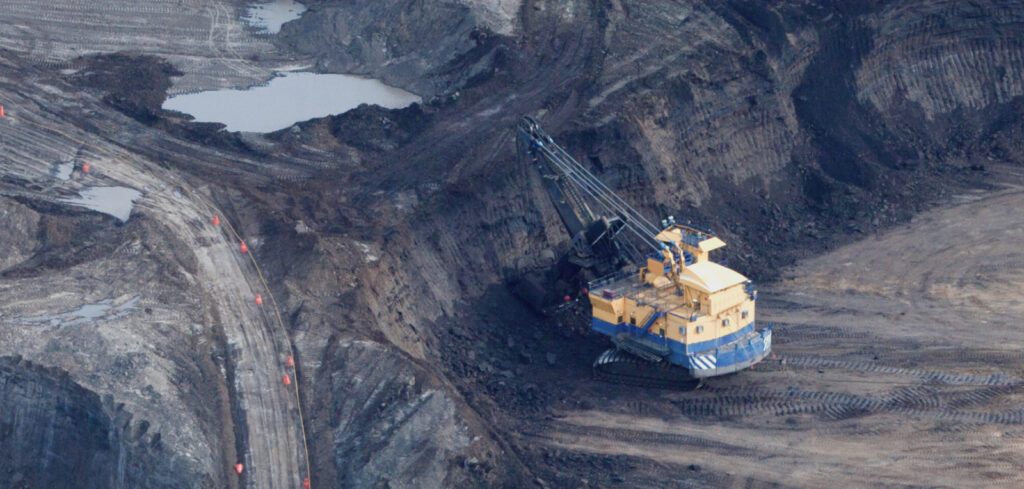
What does employer excellence look like on the mining frontline?
Standing on the shoulders of a frontline economy
South Africa’s mining sector alone employs more than 475,000 people. Beyond mining, industries such as manufacturing, logistics, agriculture and retail collectively employ millions more. For a significant portion of our workforce, work happens underground, on factory floors, in distribution centres and across remote sites – not behind desks.
The realities of these environments are fundamentally different from those of desk-bound office workers. On the frontline, work is operational, physical, and often high-risk. Teams are dispersed across shifts and sites. Connectivity may be inconsistent. Language use is diverse. Access to traditional HR channels can be limited. And digital exclusion cuts out thousands of workers from important updates that directly impact their work, safety and wellbeing.
None of this diminishes the importance of employer benchmarks. It does, however, highlight the fact that frameworks designed around corporate environments may not always capture the full complexity of frontline work.
Most employer excellence frameworks have evolved within office-based settings. They often assess factors like policy maturity, benefits structures, engagement survey results, learning programmes, and culture initiatives. These are all highly valuable indicators of organisational health. But excellence on the frontline is also defined by additional variables:
How quickly can a safety alert reach every worker on shift?
Can a hazard be reported in real time, in a worker’s first language?
Is there verified visibility that critical updates were received and understood?
Are leadership messages accessible to employees without reliable devices and mobile data access?
When excellence is measured primarily through the lens of corporate infrastructure, these operational dimensions risk being underrepresented. Not because they are unimportant, but because they require a different set of tools and benchmarks to evaluate.
Your frontline will believe it when they see it
On the frontline, accountability cannot rely on intention alone. Employer excellence needs to show up in proof.
Proof that every worker can be reached instantly during an emergency, that critical updates are delivered in multiple languages, that two-way communication channels are active and trusted, and that feedback from the ground up is captured and acted upon. Most importantly, strategies and initiatives should reflect the frontline reality – not assumptions made from the distant boardroom.
This does not replace traditional measures of employee excellence. Culture, leadership, development and employee wellbeing are still essential pillars to any organisation.
But in frontline environments, they work alongside another layer of responsibility: ensuring that communication, safety, and visibility are structurally embedded and measurable.
Expanding the definition of employer excellence
This article is not calling for existing employer recognition frameworks to be dismantled. They have helped elevate standards across industries and around the globe. But is it time to expand the lens?
If South Africa is, in many ways, a frontline economy, then our definition of employer excellence should reflect that reality.
At Wyzetalk, in my experience working with some of the country’s largest frontline and mining employers, I have seen extraordinary commitment to workforce safety and digital inclusion – particularly during times of crisis. The systems and processes required to manage complex, distributed teams are sophisticated and intentional.
These organisations deserve recognition for policy strength and for their ability to operationalise care and accountability at scale.
On the mining frontline, employer excellence is also about creating an environment where every worker – regardless of role or location – has access to information, a channel to be heard, and the reassurance that their safety is a priority to their employer.
As the nature of work continues to evolve, so too should the frameworks we use to define and celebrate excellence.